

AWC Helps to Eliminate Silica Scaling in RO System with High Iron Feedwater
Download PDF →The Facility
A 6 MGD water treatment plant in South Texas employs 6 Reverse Osmosis trains operating at 75% recovery. The facility was commissioned in 2004 and had been operating relatively smoothly. In 2006, the new EPA Arsenic Rule came into effect and the finished water was out of compliance.
Feedwater chlorination was implemented to oxidize the As(III) to As(V) for improved membrane rejection. The plant, which drew brackish water from the Gulf Coast Aquifer, saw a great improvement in arsenic rejection but also started experiencing more frequent membrane fouling.

The Problem
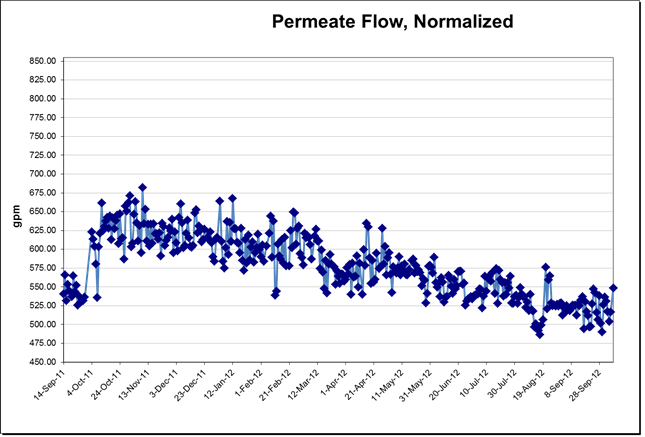
The chlorination also resulted in oxidation of Fe(II) to Fe(III) and iron fouling became a regular issue on the cartridge filters and membranes. The cleaning frequency also increased from every 4-5 months to 1-2 months by the end of 2011. An increase in normalized differential pressure (ΔP) and decrease in normalized permeate flow (NPF) were observed immediately after cleaning.
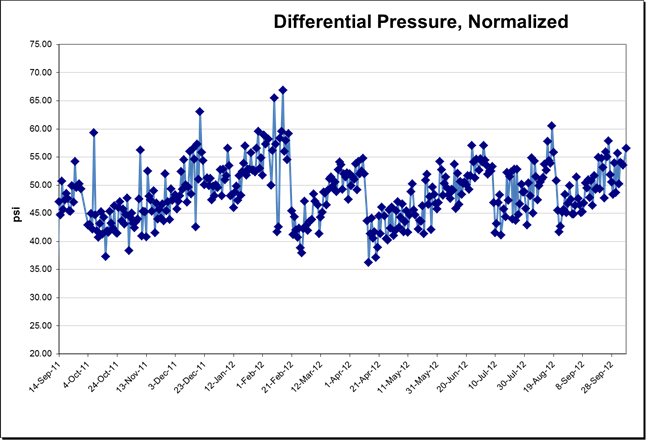
A review of the data determined moderately high pH cleanings followed by low pH cleanings were effective at reversing the increasing pressure differentials (ΔP) across both stages. However, the normalized permeate flow (NPF) was irreversibly trending downwards over time. Both stages were experiencing fouling/ scaling with the 2nd stage being more severe.
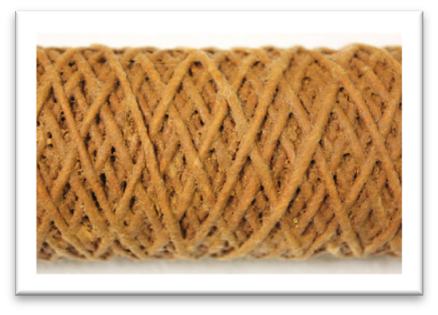
An analysis of the heavy red deposit that coated the pretreatment cartridge filters found that the foulant consisted primarily of iron salts and significant biological fouling.
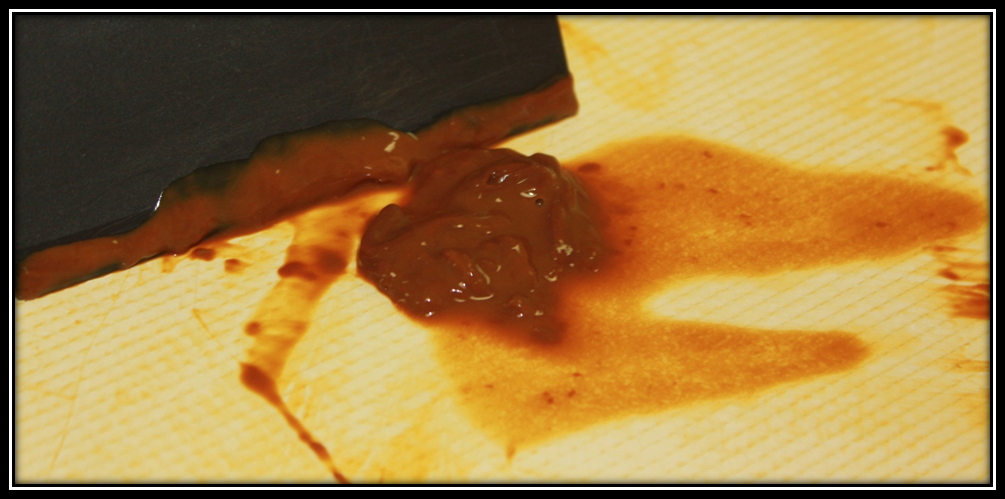
This was an indication that the fouling problem started ahead of the membranes. An effective solution, therefore, had to include control of already precipitated ferric salts.
A membrane autopsy found heavy iron fouling, silica scaling, suspended solids, and biological fouling on the tail elements of the 2nd stage. Since the feed water concentrations were not considered overly high, an indepth study was conducted to identify the cause of silica scaling. This included a review of the water quality, ROSSEP lab simulations, cleaning studies, and finally, a full-scale cleaning and antiscalant trial at the plant.
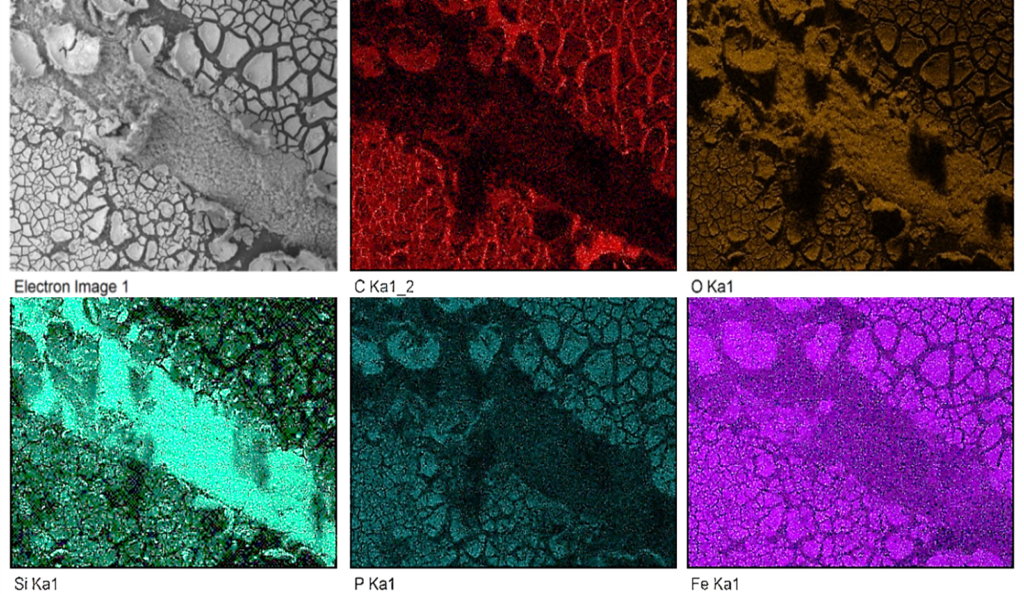
thick layer of silica scale resulted in a reduced signal from the ferric salts beneath, as determined by a
fainter color from the iron map in the region where silica scaling was heaviest.
The Solution
Two updated water analyses were compared to a water analysis taken 7 years prior. Most parameters taken in 2005 were found to be very similar to the 2012 results. However, there appeared to be a significant increase in both alkalinity and silica. The feed silica concentration was almost double the value measured in 2005. Orthophosphate was also detected in the feedwater sample collected in 2012, although the previous analysis did not include results for orthophosphate. The presence of even low amounts of phosphate at neutral pH could be problematic due to the extremely low solubility of ferric hydroxyphosphate.
Although silica levels had increased, the silica in the reject stream was calculated to be in the range of 140-150 ppm. Such concentrations of silica are not typically considered to be excessive. However, silica adsorbs to hydroxide bearing surfaces, and the presence of ferric hydroxide precipitate will catalyze silica polymerization and allow silica polymers to attach to the membrane surface.
ROSSEP lab simulations reconstructed the average water quality from the water analyses to determine the best antiscalant product and dosage. It was found that AWC Megaflux® AF was the only product within the commercially available antiscalants tested to effectively control the scaling.
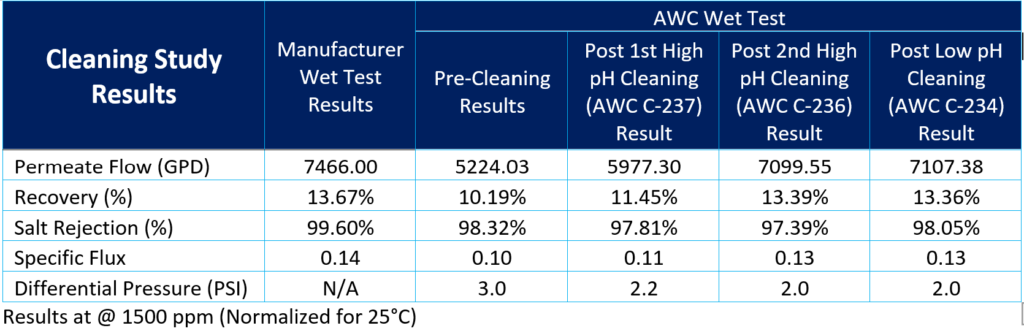
Finally, a cleaning study found that the membrane performance could be recovered with the use of the more aggressive silica cleaner, AWC C-236. A minimum cleaning time of 4-6 hours was recommended for the high pH cleaning to substantially remove silica from the membrane surface. The low pH cleaning did not further improve membrane productivity, but it was beneficial in recovering salt rejection lost after the high pH cleaning.
The permeate flow did not recover to the manufacturer’s wet test results due to the aging and compaction of the membrane. However, the results were still within the manufacturer’s minimum specifications.
The Results
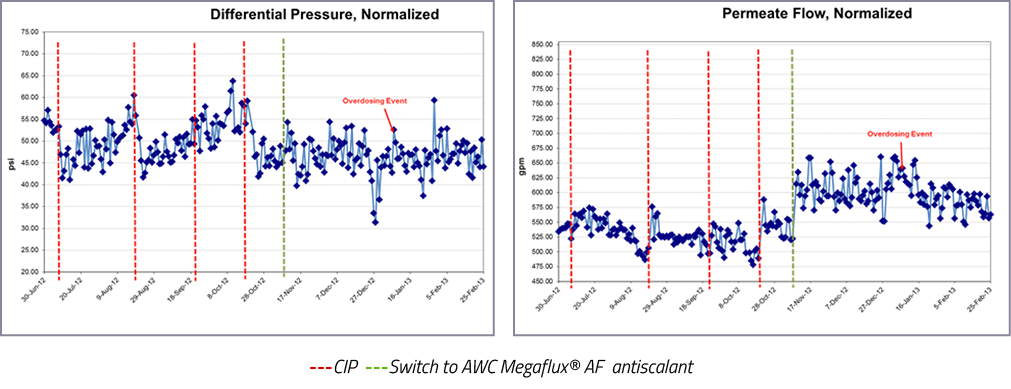
The full-scale trial had a 3-month duration and consisted in testing AWC Megaflux® AF antiscalant in one of the six trains, Train E. Cleaning was performed on Train E before the start of the full-scale trial. The antiscalant trial was performed with 6.5 ppm of AWC Megaflux® AF.
After 60 days of operation, a power outage occurred, and when the plant restored the power, the chemical pumps started dosing antiscalant while the trains were still offline. This event resulted in a severe antiscalant overdose. All trains showed a severe temporary downward trend upon this occurrence, however, this resolved over time and performance stabilized once again. At the end of the 90 days, the antiscalant trial was determined to be successful and the plant continued use of the AWC Megaflux® AF.
Shortly after the completion of this trial, the membranes were replaced with 400ft2 membranes to increase the capacity of the plant. The new higher surface membranes allowed the plant to increase the recovery to 80%. A membrane autopsy performed 6 months after the membrane changeout found no traces of any ferric or silica scaling on the membrane surface. Foulants were found to consist entirely of suspended solids and organic matter.
Read the full case study
Download PDF