

Overcoming Chronic Silica Scaling to Unlock High-Recovery RO Operation with AWC®’s Silica Disruptor
Download PDF → After years of chronic silica scaling prevented a municipal facility from operating at its design recovery, AWC® implemented a targeted silica-control strategy that stabilized membrane performance and created a pathway toward higher recovery.
This case study explores the approach used to address persistent silica scaling and control more than 400 ppm silica in the brine, resulting in increased system uptime and water recovery while reducing operating costs.
Background
A facility supplying drinking water to a growing community draws from a sandstone aquifer which has exceptionally high silica concentrations in the range of 60-70 ppm. Originally designed to operate at 85% recovery, the facility began experiencing persistent silica scaling and rising feed pressure within its first year of operation.
To mitigate scaling, the incumbent antiscalant supplier recommended reducing recovery to 80%. Despite this operational compromise, silica continued to accumulate on the membranes, resulting in recurring performance decline and frequent cleaning.
The Challenge
Conventional silica antiscalants and common clean-in-place (CIP) programs failed to provide lasting control. Unlike crystalline mineral scales such as calcium carbonate or gypsum which attract electrostatically, silica polymerizes into a dense, amorphous glass that can’t be inhibited through the same mechanisms.
As silica accumulation continued, the facility experienced:
- Declining normalized permeability
- Increasing differential pressure
- More frequent CIPs with diminishing recovery in performance
- Increasing costs related to chemical usage, labor, downtime, and membrane replacement
Years of recurring silica deposition and incomplete removal ultimately caused severe membrane fouling and the shutdown of one treatment train.
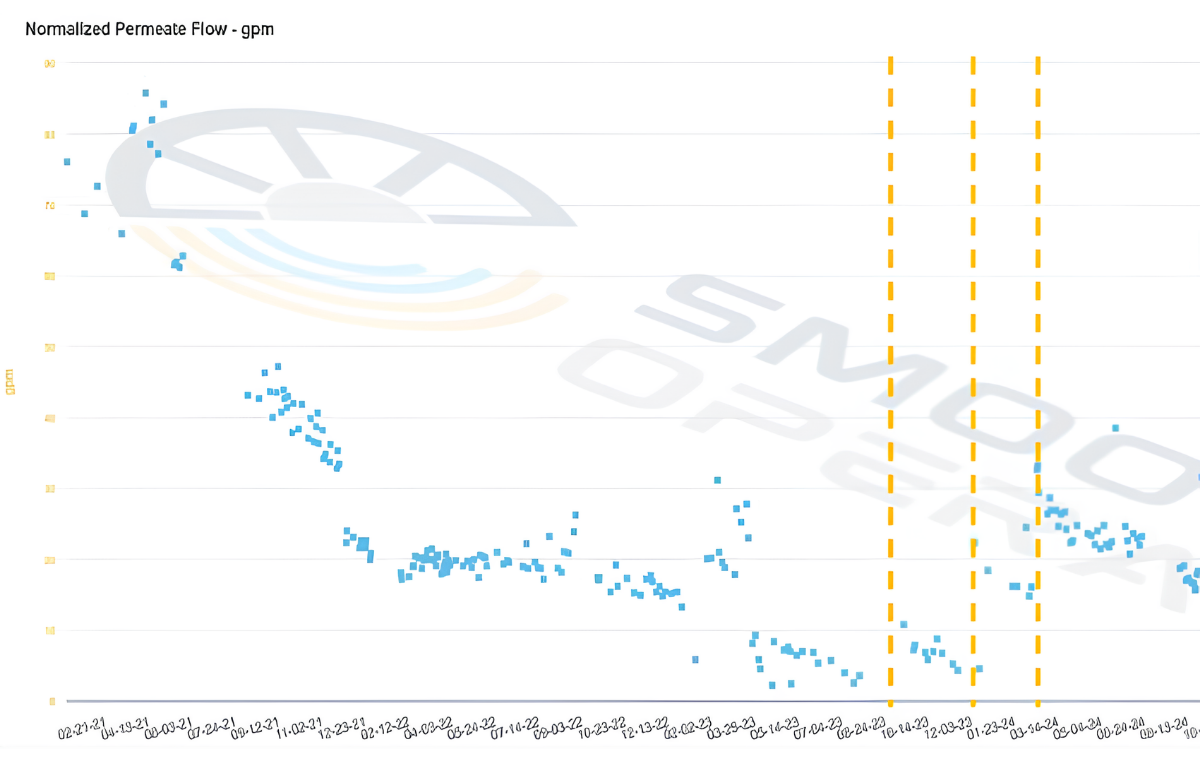
Severe Second-Stage Performance Loss from Chronic Silica Scaling
Normalized permeate flow declined by approximately 98% in just over three years as silica fouling progressively accumulated. Despite repeated CIPs under the incumbent supplier’s program (yellow dashed lines), performance could not be meaningfully restored, highlighting the severity of the polymerized silica deposits.
Root Cause Identification
AWC®’s membrane autopsy identified severe silica polymerization as the primary cause of the facility’s performance decline. Dense, glass-like silica deposits coated membrane surfaces and feed spacers. Sparse calcium carbonate deposits were also observed, likely precipitated when the competitor’s high-pH cleaning solution interacted with residual calcium in the permeate.
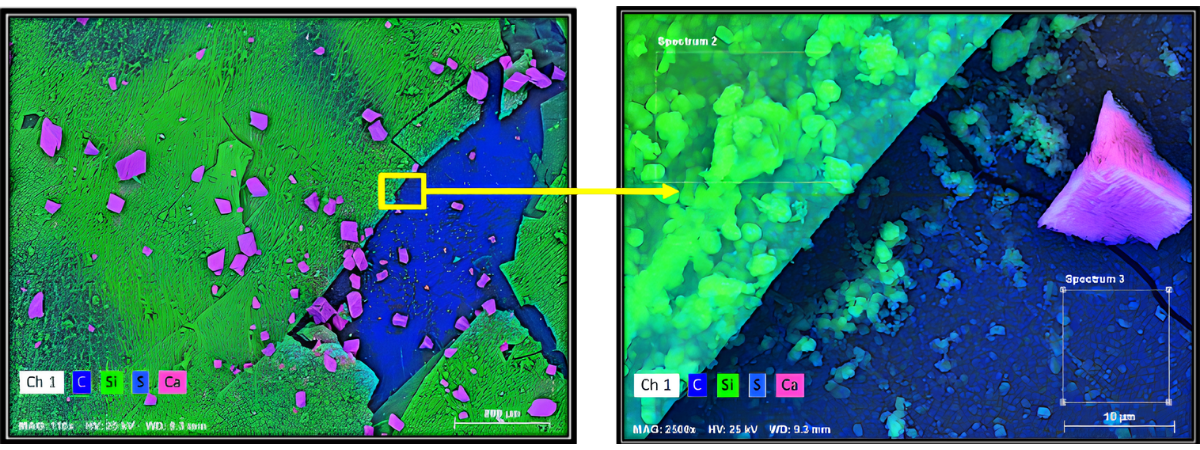
AWC®’s Superimposed Elemental Imaging (SEI) analysis revealed extensive silica scale across the membrane surface, confirming it was the primary cause of performance loss.
The findings help demonstrate that conventional scale inhibitors, even those specifically marketed towards silica control, cannot effectively suppress silica scale formation. Effective control would require an approach specifically designed to disrupt silica polymerization, which AWC® sought to address with silica disruptors.
Our Solution
AWC® developed a four-part treatment strategy to restore membrane performance, prevent recurring silica polymerization, validate operation at higher recovery, and continuously optimize system performance.
1. Restore Membrane Performance
Guided by our membrane autopsy and cleaning studies, AWC® implemented a targeted cleaning program using AWC® C-219, a specialty cleaner designed for the removal of severe silica. In a single CIP, the program removed the accumulated silica deposits that previous back-to-back cleanings had been unable to address, restoring membrane performance and establishing a clean baseline for the new silica control strategy.
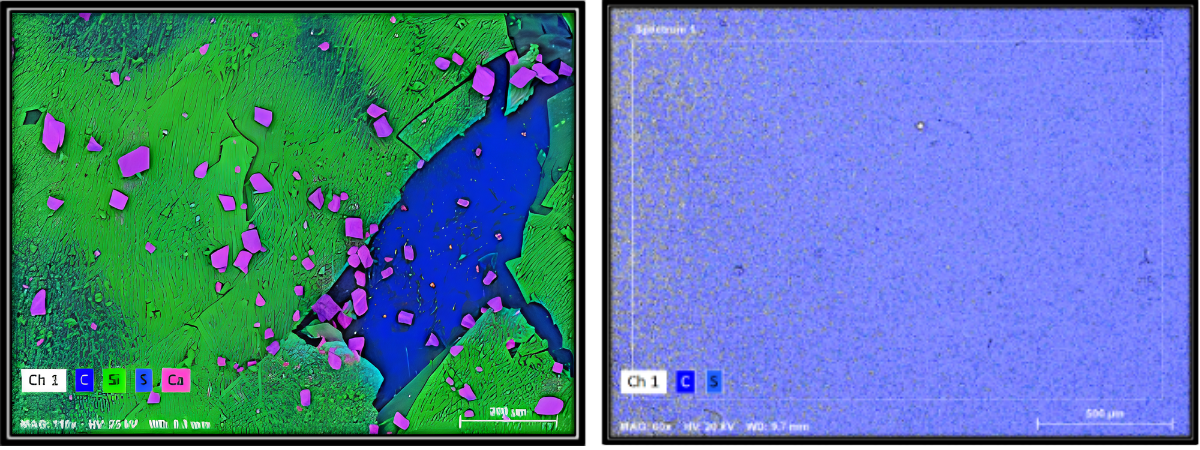
Superimposed Elemental Imaging (SEI) analysis before and after cleaning demonstrated the effectiveness of the targeted silica cleaning protocol with AWC® C-219, thereby validating the cleaning strategy prior to full-scale implementation.
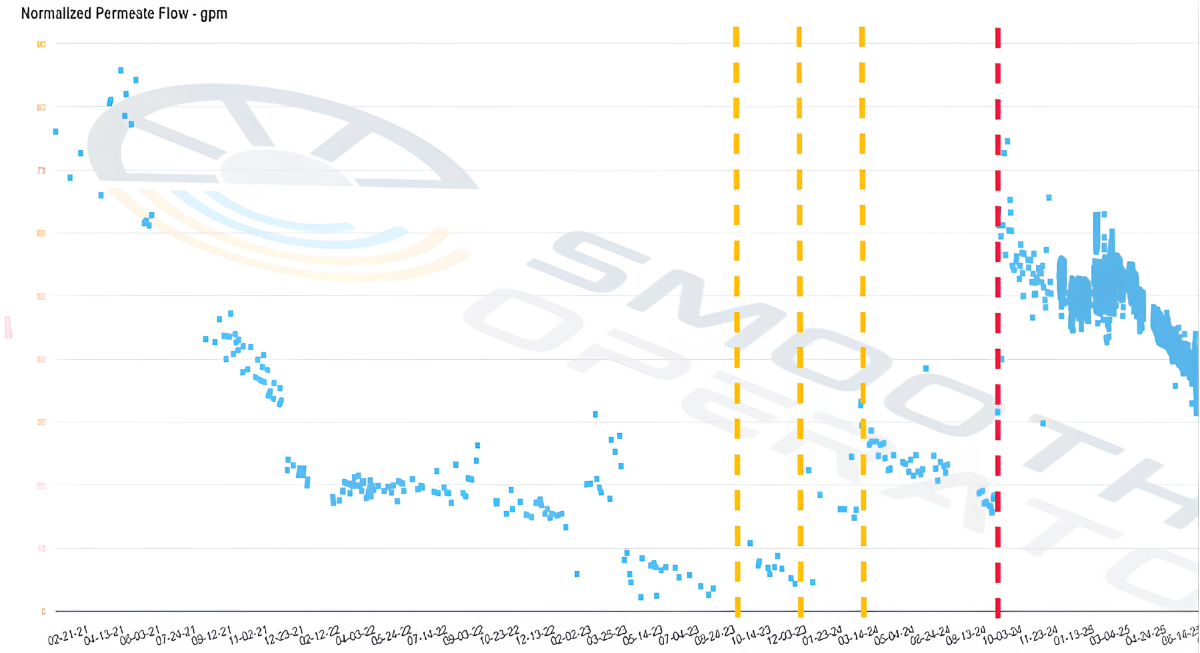
AWC® Cleaning Protocol Restores Second-Stage Membrane Performance.
Following years of severe performance decline and repeated competitor CIPs with limited recovery (yellow dashed lines), a single CIP using AWC®’s targeted silica cleaning protocol with AWC® C-219 (red dashed line) produced a dramatic recovery in normalized second-stage permeate flow, restoring performance to levels not observed in years.
2. Prevent Silica Polymerization
AWC® introduced Pureflux® Si, a next-generation silica disruptor developed specifically to interfere with the silica polymerization process. Unlike conventional silica antiscalants, Pureflux® Si is engineered to control silica under exceptionally challenging conditions, enabling membrane systems to safely operate at silica concentrations beyond conventional treatment limits. Proton® antiscalant projection software was used to evaluate the facility’s water chemistry, scaling risk, and operating conditions, and to optimize the treatment strategy.
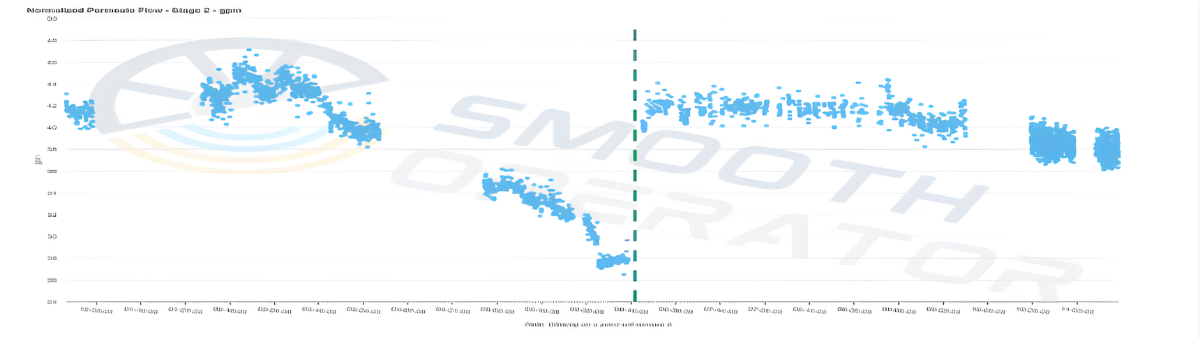
Stable Performance with Pureflux® Si.
Following CIP and implementation of the Pureflux® Si silica disruptor (green), the 2nd-stage normalized permeate flow recovered and remained stable, with minimal performance decline attributed to biofouling.
3. Validate Higher Recovery Operation
An on-site Pureflux® Si pilot operated successfully at 85% and later 87% recovery, with reject silica exceeding 400 ppm as SiO₂. Over nearly 12 months of continuous operation, performance remained stable with no CIP-triggering events, demonstrating sustained silica control under high-recovery conditions.
4. Monitor & Optimize Performance
Following full-scale implementation, AWC® used Smooth Operator™ RO Data Normalization Software to continuously evaluate normalized operating data, validate ongoing silica control, optimize CIP intervals, and provide the data needed to evaluate future recovery increases. A post-implementation membrane autopsy provided further validation, confirming no silica deposits under full-scale operating conditions.
The Results
The facility achieved effective, sustained silica control for the first time in its history, replacing years of reactive scale management with stable, reliable membrane operation. The result was a measurable improvement in system uptime, operating costs, membrane protection, and higher water recovery.
-
Increased System Uptime
Cleaning intervals were extended from approximately every three months to more than one year, reducing CIP-related downtime and increasing system availability.
-
Reduced Chemical Consumption & Operating Costs
Fewer CIPs reduce cleaning chemical consumption, operator labor, energy use, and downtime. With demonstrated energy savings of 38% post-cleaning, this translates into lower operating costs and reduced operational burden associated with silica scaling.
-
Improved Membrane Protection
Chronic scale buildup can cause more than a significant decline in membrane performance. As deposits accumulate, increased abrasion at feed spacer contact points can physically damage the membrane’s surface, resulting in irreversible losses in salt rejection. Dye testing of the autopsied membranes revealed damage consistent with this mechanism. By preventing recurring silica deposition and reducing cleaning frequency, the new treatment program helps protect membrane integrity and reduces the risk of premature membrane replacement.
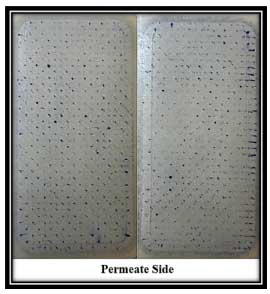
Flat-sheet membrane coupons were dyed on the permeate side to visualize membrane damage associated with scale buildup and abrasion
-
Higher Recovery & Water Savings
With silica under control, the facility is moving towards its original 85% design recovery. A successful pilot operation with 87% recovery demonstrated the potential for further optimization. Increasing recovery to this range could save approximately 15–21 million gallons (57,000–80,000 m³) of water annually.
With AWC®’s advanced silica disrupting technology, high silica no longer has to define the operating limits of membrane operation. By targeting silica polymerization at its source, Pureflux® Si pushes beyond conventional silica control to unlock higher recovery, greater reliability, and long-term membrane performance.
Read the full case study
Download PDF