Biofouling keeps coming back for a reason.
Conventional high-pH cleaners often remove only part of the biofilm attached to the membrane surface. As a result, only part of the membrane area is restored, forcing the remaining active membrane surface to operate at higher flux to maintain production. This increases feed pressure, energy consumption, and operating costs, while accelerating fouling and shortening cleaning intervals.
As biofilm matures, it becomes denser, more strongly adhered, and increasingly resistant to conventional cleaning chemistries, making complete removal progressively more difficult. Continued accumulation eventually obstructs the feed spacer channels, leading to elevated differential pressure. Prolonged operation under these conditions increases mechanical stress on the membrane elements, deforms feed spacers, accelerates irreversible damage, and significantly shortens membrane life.
As cleaning effectiveness declines, cleaning frequency increases, creating a self-perpetuating cycle of recurring biofouling, declining membrane performance, rising operating costs, and premature membrane replacement. Until the biofilm itself is effectively removed, the cycle continues.
Cleanflux™ Bio breaks that cycle.
Developed specifically for membrane systems where recurring biofouling limits performance despite routine clean-in-place (CIP) cleaning, Cleanflux™ Bio penetrates, disrupts, and lifts biofilm from the membrane surface to help restore original performance and water production, extend cleaning intervals, and break the cycle of recurring biofouling.
Performance Advantages:
- check_circle Restores baseline membrane performance
- check_circle Shortens clean-in-place (CIP) time
- check_circle Extends cleaning intervals & membrane replacements
- check_circle Reduces energy consumption & OPEX costs
- check_circle Recovers lost productivity & system efficiency
- check_circle Compatible with all membrane types
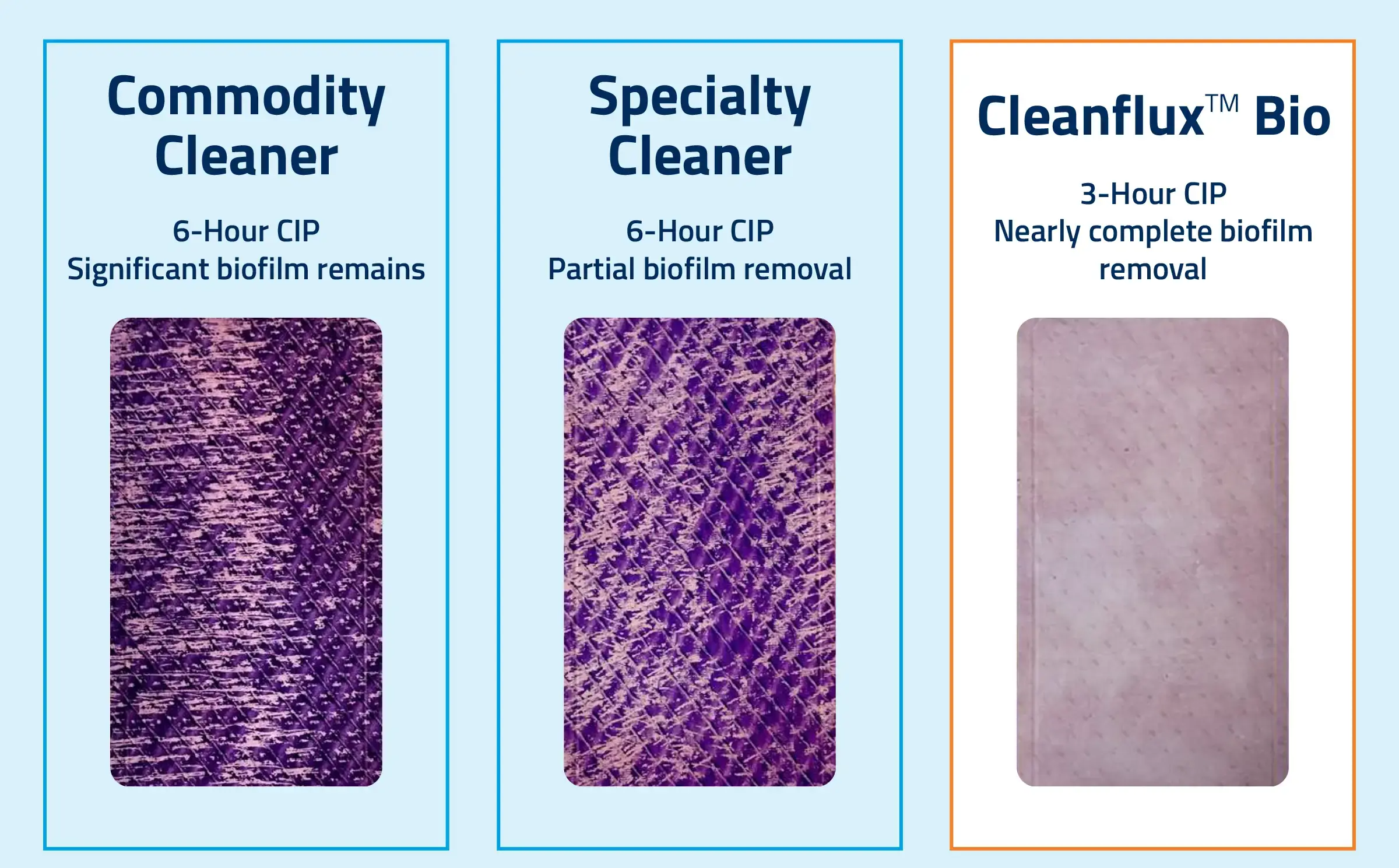
Cleanflux™ Bio Delivers More Complete Biofilm Removal in Less Time
Flat-sheet membrane coupons were dyed to visualize residual biofilm following cleaning. Purple staining indicates areas where biofilm remained attached to the membrane surface after cleaning. Cleaning performance was validated using data normalized through AWC’s Smooth Operator software™.
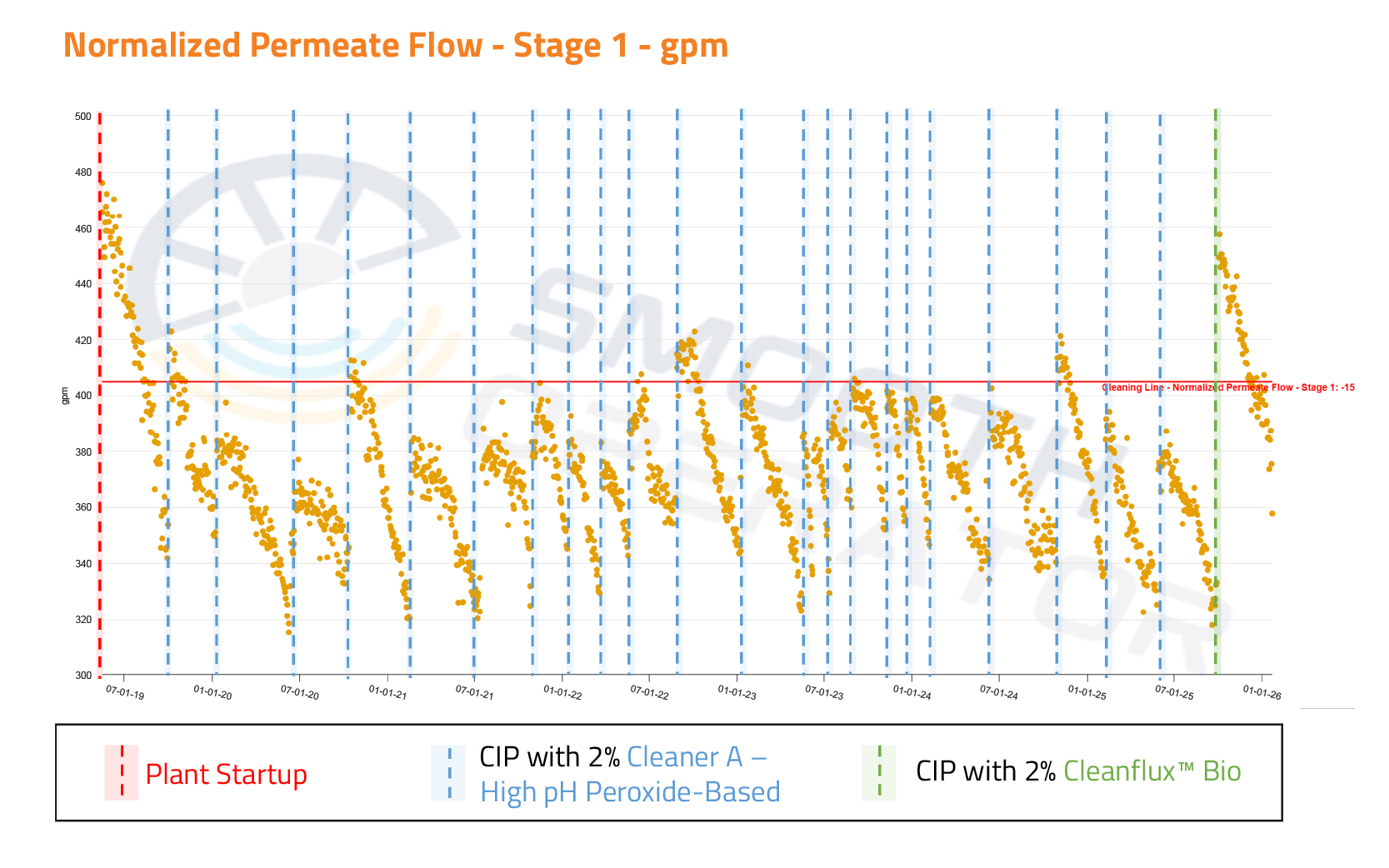
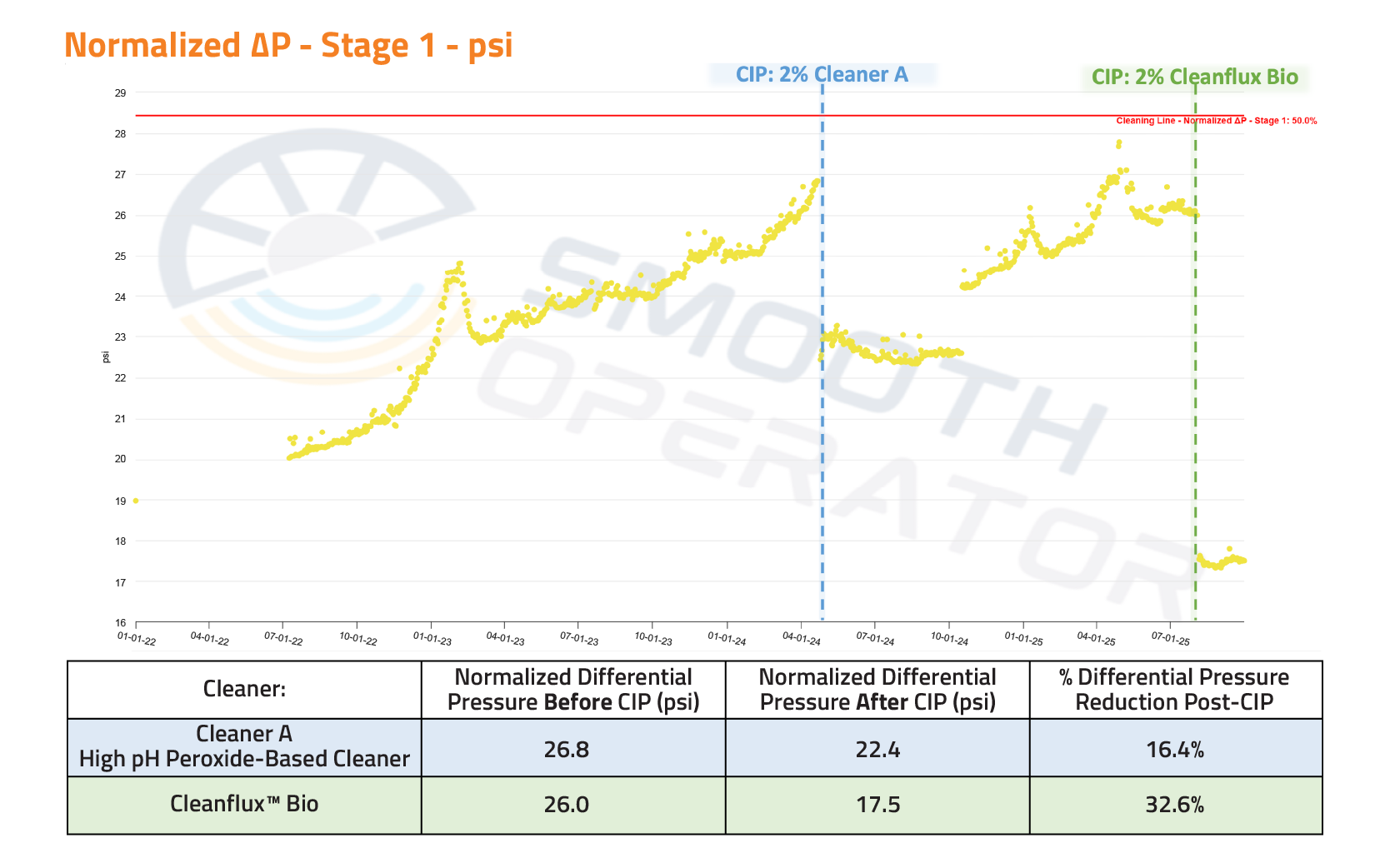
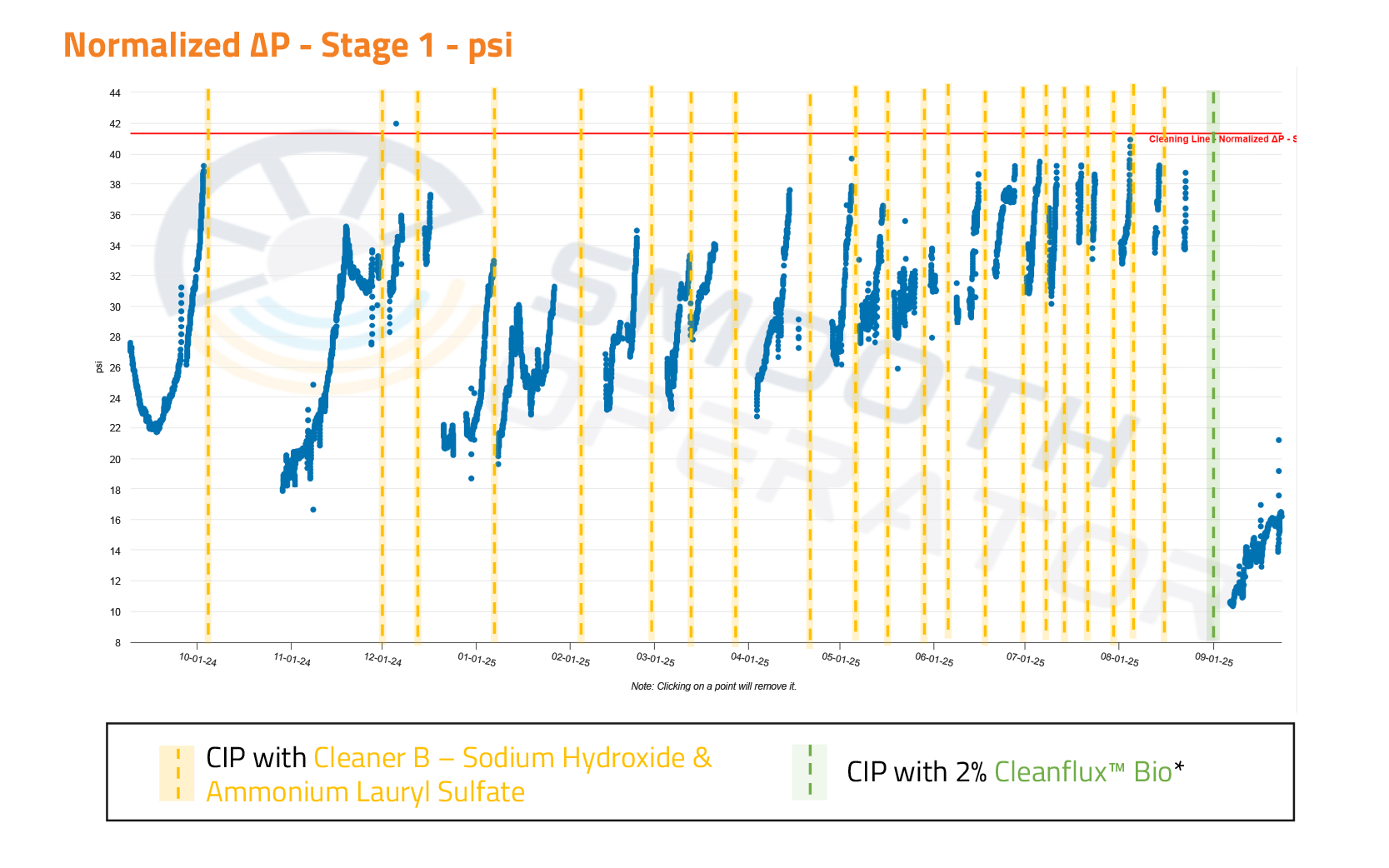
The Proof is in the Performance Data